

Pediatric Brain Tumors
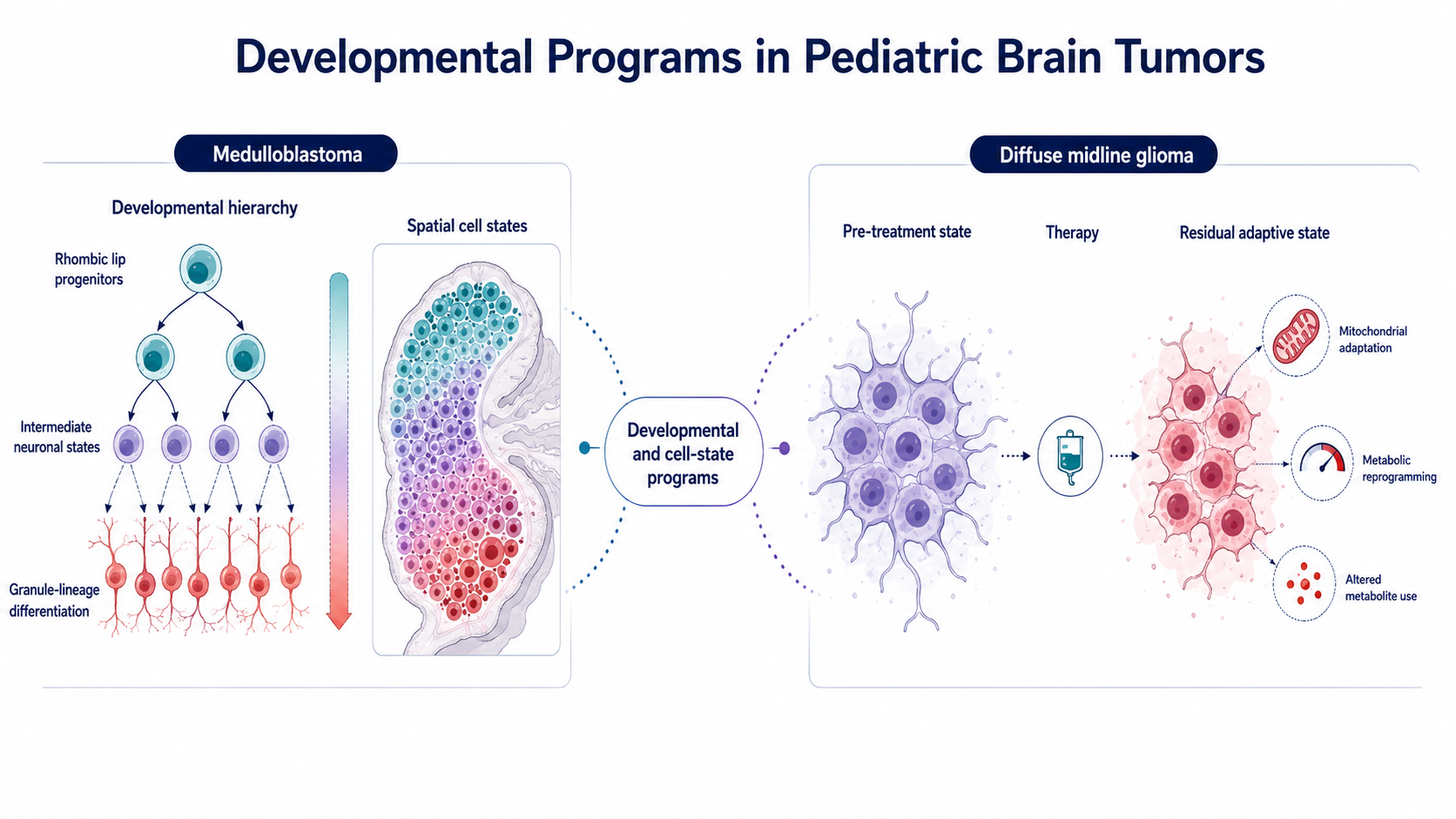
Pediatric brain tumors often retain developmental programs that shape cellular identity, plasticity, and treatment response. We combine human single-cell datasets with lineage tracing and functional models to distinguish developmental resemblance from actionable dependency.
Medulloblastoma cellular states
In medulloblastoma, we are building a single-nucleus resource of malignant and nonmalignant cellular states and testing regulatory programs associated with DNA replication, chromatin regulation, DNA-damage response, and response to radiation.
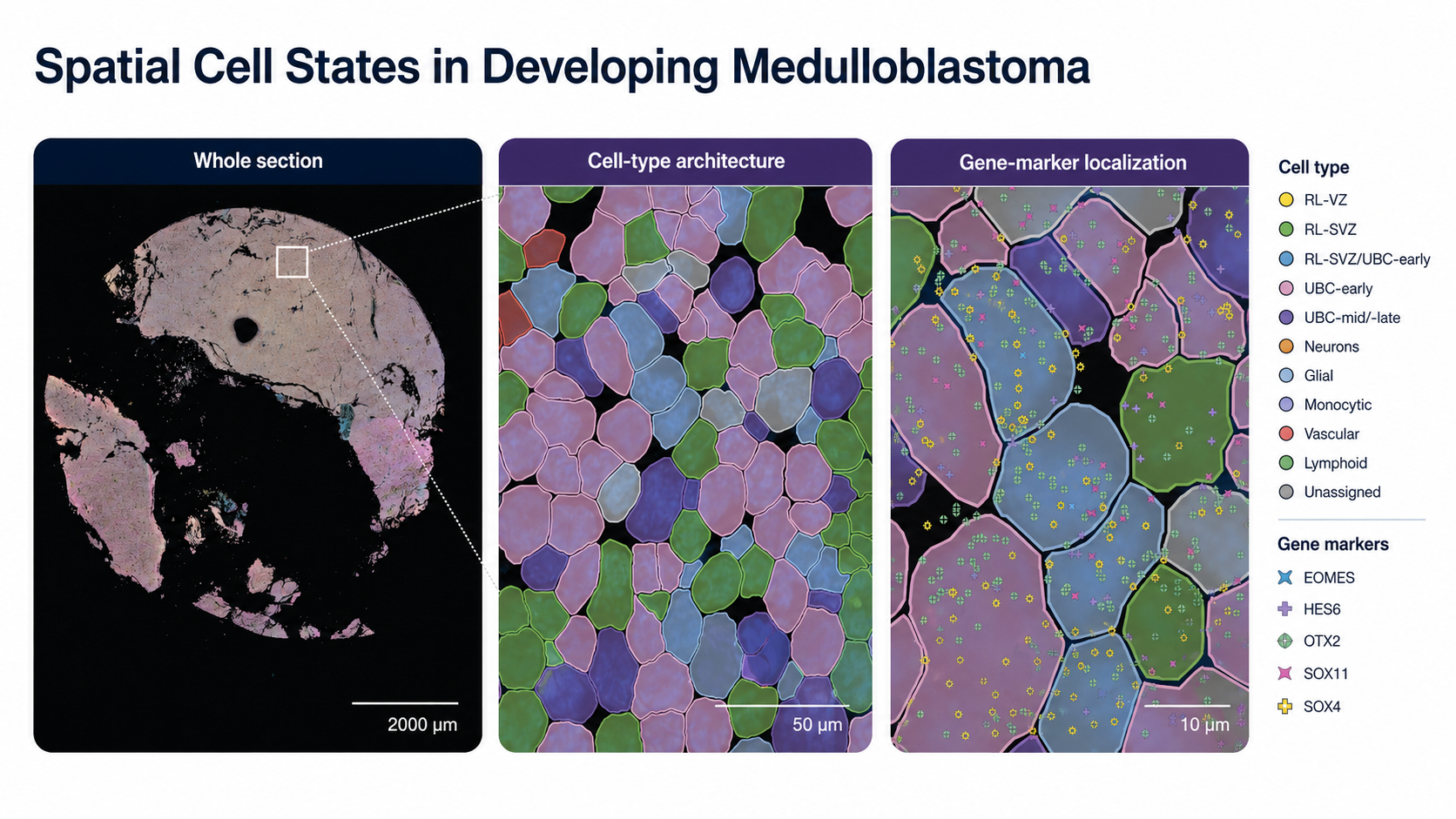
Longitudinal evolution of SHH medulloblastoma
We use longitudinal single-cell, epigenomic, genomic, and spatial profiling to define how SHH medulloblastoma evolves under therapy. Studies of treatment-naive and recurrent tumors identify treatment-selected cell states, regulatory programs, and changes in the tumor microenvironment, with the goal of defining biomarkers and therapeutic vulnerabilities in recurrent disease.
Developmental–cancer genetic convergence
NIH/NCI R03 — R03CA309623
Annotating the phenotypes of variants driving embryonal brain tumors and birth defects
We are investigating whether somatic alterations selected in embryonal brain tumors converge with rare germline variation associated with developmental disorders. By integrating large genomic cohorts with single-cell, chromatin, and spatial data, the project aims to prioritize shared genes, protein domains, and developmental pathways and define the cellular phenotypes associated with high-confidence candidate variants.
Adaptive resistance to dordaviprone in diffuse midline glioma
Our studies of patient tumors and patient-derived models identified mitochondrial adaptation and PPARGC1A-associated mitochondrial biogenesis as features of residual disease after dordaviprone treatment. Ongoing work seeks to define the causal regulators of this persister state and identify clinically tractable combinations that prevent or overcome adaptive resistance.
The translational objective is to nominate biomarkers and rational combinations that can be evaluated in disease-relevant models and incorporated into future clinical studies.
Representative publications
- Okada M, et al. Single-nucleus profiling of postmortem diffuse midline gliomas identifies mitochondrial biogenesis as a resistance mechanism to imipridone therapy. Neuro-Oncology. 2026.
- Yu B, et al. Measles oncolytic virus as an immunotherapy for recurrent/refractory pediatric medulloblastoma and atypical teratoid/rhabdoid tumor: Results from PNOC005. Clinical Cancer Research. 2025;31:3463–3475.
- Raphael I, et al. The T cell receptor landscape of childhood brain tumors. Science Translational Medicine. 2025;17:eadp0675.